





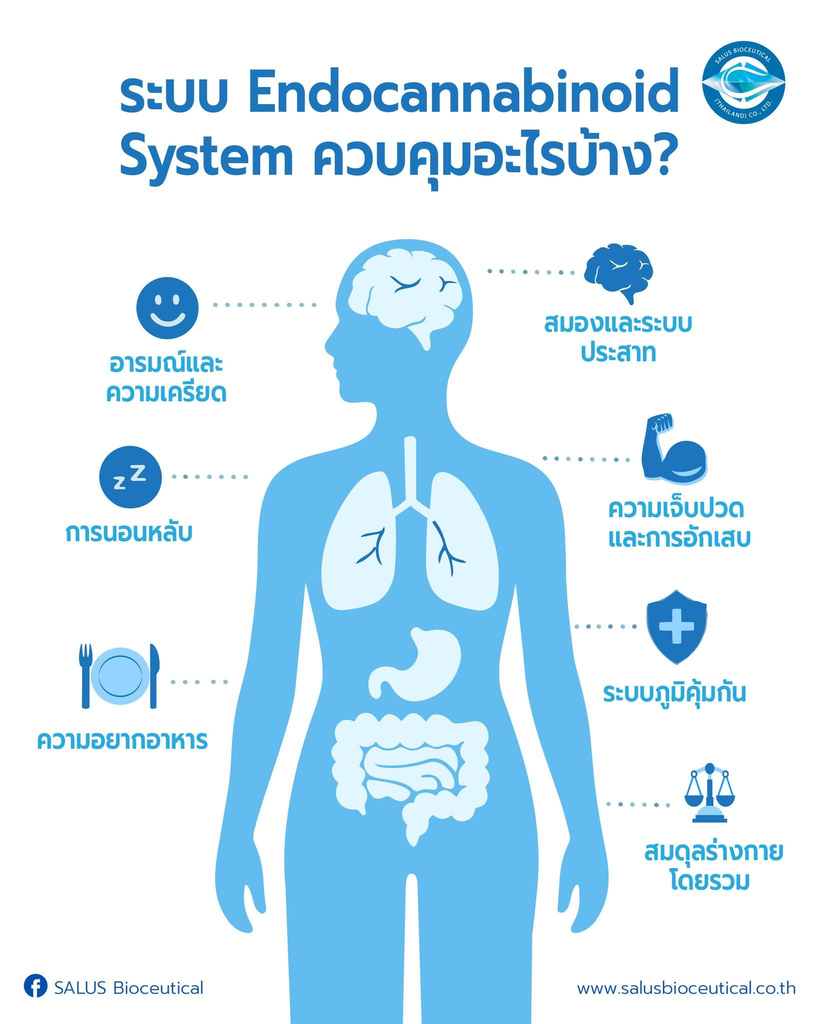
The Endocannabinoid System (ECS) is a biological communication system found throughout the human body. It plays an important role in maintaining homeostasis, which means helping the body keep its internal environment stable as conditions change.
The ECS is involved in regulating a wide range of physiological processes, including pain perception, appetite, mood, memory, immune function, inflammation, digestion, sleep, and energy metabolism.
One of the most interesting aspects of the ECS is that it can interact with cannabinoids produced naturally by the body as well as cannabinoids found in cannabis and hemp, such as THC and CBD.
But how does this system actually work?
What Is the Endocannabinoid System?
The Endocannabinoid System is a network of receptors, naturally occurring cannabinoids, and enzymes that work together to regulate communication between cells.
The ECS consists of three main components:
1. Cannabinoid Receptors
Cannabinoid receptors are proteins located on the surface of cells throughout the body. They receive signals from endocannabinoids and other compounds that interact with the ECS.
The two main cannabinoid receptors are:
- CB1 receptors
- CB2 receptors
2. Endocannabinoids
Endocannabinoids are cannabinoid-like molecules naturally produced by the human body.
Two of the best-known endocannabinoids are:
- Anandamide (AEA)
- 2-Arachidonoylglycerol (2-AG)
These molecules act as chemical messengers, binding to cannabinoid receptors and helping regulate different physiological processes.
3. Enzymes
Enzymes are responsible for producing and breaking down endocannabinoids.
Together, endocannabinoids, receptors, and enzymes form a signaling network that allows the ECS to respond to changes within the body.
CB1 and CB2 Receptors: What’s the Difference?
Although CB1 and CB2 receptors belong to the same receptor family, they are distributed differently throughout the body and are associated with different physiological functions.
CB1 Receptors
CB1 receptors are found predominantly in the central nervous system, particularly in the brain and spinal cord.
They are involved in regulating processes such as:
- Neurotransmitter release
- Pain perception
- Memory
- Appetite
- Mood
- Motor coordination
CB1 receptors help regulate communication between neurons by influencing the release of neurotransmitters across synapses.
Why Is THC Associated With Psychoactive Effects?
One of the best-known interactions within the ECS is the interaction between THC and CB1 receptors.
THC can bind to CB1 receptors in the brain and activate them. This interaction is an important mechanism underlying the intoxicating or psychoactive effects associated with THC.
CBD, in contrast, does not produce the same intoxicating effects as THC and interacts with the ECS in a different way.
CB2 Receptors
CB2 receptors are found primarily in cells associated with the immune system, including various immune cells and tissues such as the spleen and tonsils.
They have been associated with processes involving:
- Immune signaling
- Inflammation
- Cellular communication
Research has also identified CB2 receptors in certain regions of the nervous system, including areas of the brain such as the hippocampus.
Studies investigating CB2 receptors continue to explore their potential role in regulating neuronal activity, immune responses, and communication between different biological systems.
However, much of this research is still developing, and the precise role of CB2 receptors in humans remains an active area of scientific investigation.
How Does the ECS Help Maintain Balance?
One of the most important functions associated with the Endocannabinoid System is homeostasis.
Homeostasis refers to the body’s ability to maintain a relatively stable internal environment despite changes from both inside and outside the body.
For example, the body needs to continuously adjust processes such as:
Energy balance → Appetite → Metabolism → Immune activity → Pain signaling → Stress responses
The ECS is one of several biological systems involved in helping regulate these processes.
Rather than simply “turning a function on or off,” the ECS acts more like a fine-tuning system, helping adjust cellular communication when the body needs it.
The ECS and Metabolism
Research suggests that the Endocannabinoid System also interacts with metabolic processes throughout the body.
ECS signaling has been studied in tissues including:
- Adipose tissue (fat cells)
- Liver cells
- Gastrointestinal tract
- Skeletal muscle
- Pancreas
Because of these interactions, researchers have investigated the potential relationship between the ECS and processes such as energy storage, nutrient metabolism, glucose regulation, and insulin sensitivity.
The ECS has therefore attracted scientific interest in relation to metabolic conditions such as obesity and diabetes, as well as cardiovascular health.
However, these relationships are complex, and the role of ECS signaling can vary depending on the tissue, receptor, cannabinoid, and biological context.
How Do Cannabis Compounds Interact With the ECS?
Cannabinoids from cannabis and hemp can interact with the Endocannabinoid System, but different cannabinoids interact with the system in different ways.
THC
THC can interact directly with CB1 receptors and is responsible for the characteristic intoxicating effects associated with cannabis.
CBD
CBD does not produce the same intoxicating effects as THC. Instead, it appears to interact with the ECS through a more complex range of mechanisms rather than simply activating CB1 or CB2 receptors in the same way as THC.
This difference is one reason why THC and CBD can produce very different effects despite both being cannabinoids.
Why Is the Endocannabinoid System Important?
The Endocannabinoid System is an extensive biological signaling network that connects multiple physiological processes throughout the body.
From the brain and nervous system to the immune system and metabolism, the ECS is involved in maintaining the body’s internal balance.
Understanding the ECS is also important for understanding how cannabinoids such as THC, CBD, CBG, CBN, and other phytocannabinoids may interact with the human body.
As cannabinoid research continues to develop, scientists are gaining a better understanding of the complex relationship between cannabinoids, cannabinoid receptors, and human physiology.
For businesses developing cannabinoid-based products, understanding this biological system provides an important foundation for responsible product development, formulation, research, and innovation.
At SALUS Bioceutical, we believe that understanding cannabinoid science is an essential part of developing high-quality cannabinoid ingredients and supporting innovation across the hemp, cannabis, wellness, and healthcare industries.
References
- Backes, M. Cannabis Pharmacy: The Practical Guide to Medical Marijuana: Revised and Updated. Hachette UK, 2017.
- Zhang, H.-Y., et al. “Cannabinoid CB2 receptors modulate midbrain dopamine neuronal activity and dopamine-related behavior in mice.” Proceedings of the National Academy of Sciences, 2014, 111(46), E5007–E5015.
- Stempel, A. V., et al. “Cannabinoid type 2 receptors mediate a cell type-specific plasticity in the hippocampus.” Neuron, 2016, 90(4), 795–809.
- Quraishi, S. A., & Paladini, C. A. “A central move for CB2 receptors.” Neuron, 2016, 90(4), 670–671.
- Bellocchio, L., Cervino, C., Pasquali, R., & Pagotto, U. “The endocannabinoid system and energy metabolism.” Journal of Neuroendocrinology, 2008, 20(6), 850–857.